How can I contact SMSbiotech for additional assistance?
If you need additional assistance or have a question the chatbot cannot answer, please visit the Contact page on the SMSbiotech website. Your inquiry will be directed to the appropriate department, and a member of the SMSbiotech team will respond as appropriate.
About This Chatbot
respond, need, inquiry, assistance, department, member, team, additional
Can I ask questions outside of SMSbiotech?
The chatbot is designed primarily to answer questions about SMSbiotech, its investigational technologies, scientific research, clinical development, and publicly available company information. While it may provide limited background information to help explain certain topics, its primary purpose is to assist visitors with questions related to SMSbiotech.
About This Chatbot
ask, background, explain, primary, purpose, outside, primarily, certain
Why did the chatbot refer me to SMSbiotech?
Some questions require assistance from a member of the SMSbiotech team. When the chatbot cannot confidently answer a question or when a request involves clinical, scientific, business, regulatory, or other specialized matters, it will recommend contacting the company so the appropriate team can provide assistance.
About This Chatbot
confidently, specialized, matters, require, involves, contacting, request, recommend
Why can't the chatbot answer every question?
The chatbot is designed to answer questions related to SMSbiotech and the information available on its website. Some questions may fall outside its intended scope, require individualized medical advice, involve confidential information, or concern topics that are not publicly available. In these situations, the chatbot may recommend contacting SMSbiotech directly.
About This Chatbot
fall, scope, individualized, confidential, situations, every, outside, require
Can the chatbot recommend treatments?
No. The chatbot cannot recommend treatments, medications, or medical procedures. It is designed to provide general information about SMSbiotech and its investigational research programs. Treatment decisions should always be made in consultation with a qualified healthcare professional.
About This Chatbot
medications, consultation, always, made, recommend, decisions, qualified, procedures
Can the chatbot diagnose medical conditions?
No. The chatbot cannot diagnose medical conditions or evaluate individual health concerns. It is intended to provide general information about SMSbiotech and its publicly available research and development activities. Medical concerns should always be discussed with a qualified healthcare professional.
About This Chatbot
diagnose, concerns, always, discussed, health, intended, qualified, individual
Can the chatbot provide medical advice?
No. The SMSbiotech chatbot does not provide medical advice, diagnose medical conditions, or replace the guidance of a qualified healthcare professional. If you have questions about your health or medical care, please consult your physician or another qualified healthcare provider.
About This Chatbot
replace, physician, another, provider, diagnose, guidance, consult, advice
What can this chatbot help me with?
The SMSbiotech chatbot is designed to answer questions about the company, its investigational technology platform, clinical development programs, scientific research, publications, leadership, partnerships, and other information available on the SMSbiotech website. It can also help visitors locate relevant resources and direct them to additional information when appropriate.
About This Chatbot
locate, partnerships, relevant, leadership, answer, additional, publications, resources
I couldn't find my answer. What should I do?
If you were unable to find the information you were looking for, please contact SMSbiotech directly through the Contact page on the company's website. Your inquiry will be reviewed and directed to the appropriate team. Questions that cannot be answered by the website or chatbot may help identify opportunities to expand future website resources.
Media, Careers & Contact
unable, looking, inquiry, identify, directly, expand, team, future
How do I contact SMSbiotech?
The best way to contact SMSbiotech is through the Contact page on the company's website. Inquiries are directed to the appropriate department, including scientific research, clinical development, business development, investor relations, media, careers, or general information.
Media, Careers & Contact
best, relations, way, careers, department, investor, media, inquiries
How can researchers collaborate with SMSbiotech?
SMSbiotech welcomes opportunities to collaborate with researchers, academic institutions, healthcare organizations, and other scientific partners. Individuals or organizations interested in research collaborations are encouraged to contact the company through its website to discuss potential opportunities.
Media, Careers & Contact
discuss, collaborate, welcomes, academic, institutions, partners, organizations, encouraged
How can vendors contact SMSbiotech?
Companies interested in providing products or services to SMSbiotech can submit inquiries through the Contact page on the company's website. Vendor inquiries are reviewed and directed to the appropriate department based on the nature of the products or services offered.
Media, Careers & Contact
services, submit, vendors, providing, vendor, nature, offered, based
How can I learn about career opportunities?
Career opportunities at SMSbiotech are posted on the Careers section of the company's website as positions become available. Interested candidates can learn more about current openings, company culture, and application requirements by visiting the Careers page.
Media, Careers & Contact
posted, positions, candidates, openings, culture, visiting, become, career
Where can I find company logos and media resources?
Official company logos, approved brand assets, and media resources may be available through SMSbiotech's Media or Resources section. If the materials you need are not available on the website, please contact SMSbiotech directly for assistance.
Media, Careers & Contact
logos, official, brand, assets, materials, need, directly, assistance
How can members of the media contact SMSbiotech?
Members of the media are encouraged to contact SMSbiotech through the Contact page on the company's website. Media inquiries are directed to the appropriate company representatives who can assist with interview requests, company information, press materials, and other media-related questions.
Media, Careers & Contact
representatives, interview, media-related, assist, press, materials, requests, members
Where can I find company news?
The latest company news, announcements, scientific updates, press releases, and corporate developments are available in the News section of the SMSbiotech website. Visitors can explore recent milestones, research updates, conference participation, and other publicly shared information to stay informed about the company's activities.
Media, Careers & Contact
recent, stay, announcements, press, conference, shared, latest, explore
Where can I find company news?
SMSbiotech shares company announcements, scientific updates, clinical development milestones, publications, event participation, and other corporate news through the News section of its website. Visitors are encouraged to check the website regularly for the latest publicly available information.
Investors & Strategic Partners
event, check, regularly, shares, announcements, milestones, participation, latest
How can I contact the business development team?
Organizations interested in strategic partnerships, licensing opportunities, research collaborations, or other business inquiries can contact SMSbiotech through the Contact page on the company's website. Business-related inquiries are directed to the appropriate members of the company's leadership or business development team.
Investors & Strategic Partners
business-related, partnerships, licensing, organizations, members, leadership, team, inquiries
Does SMSbiotech license its technology?
SMSbiotech evaluates strategic collaboration and licensing opportunities that align with its scientific, clinical, and business objectives. Opportunities are considered based on their potential to support the continued development and responsible advancement of the company's proprietary investigational technologies.
Investors & Strategic Partners
license, align, licensing, considered, objectives, based, responsible, advancement
How can organizations collaborate with SMSbiotech?
SMSbiotech welcomes opportunities to explore collaborations with academic institutions, healthcare organizations, biotechnology companies, pharmaceutical companies, and other strategic partners. Organizations interested in discussing research, clinical development, manufacturing, or business opportunities are encouraged to contact the company through its website.
Investors & Strategic Partners
pharmaceutical, discussing, collaborate, welcomes, explore, academic, institutions, partners
Where can I find investor information?
Information for current and prospective investors is available through the Investor section of the SMSbiotech website. Visitors can access company news, corporate updates, leadership information, scientific milestones, and other publicly available resources related to the company's ongoing development.
Investors & Strategic Partners
prospective, access, milestones, investor, investors, corporate, updates, leadership
What makes SMSbiotech's platform commercially unique?
SMSbiotech has developed a proprietary investigational cell platform supported by scientific research, intellectual property, manufacturing capabilities, and clinical development. The company continues to advance its technology through a scalable development strategy designed to support future research, strategic collaborations, and potential commercialization following applicable regulatory approvals.
Investors & Strategic Partners
commercially, capabilities, strategy, scalable, commercialization, approvals, following, unique
What therapeutic indications is SMSbiotech pursuing?
SMSbiotech is investigating its proprietary SMS Cell Platform across multiple therapeutic areas with significant unmet medical needs. The company's research priorities may evolve as scientific evidence, clinical development, and regulatory activities progress. Current information about investigational programs is available on the Pipeline section of the SMSbiotech website.
Investors & Strategic Partners
indications, pursuing, priorities, evolve, pipeline, multiple, progress, investigating
What is SMSbiotech's business model?
SMSbiotech is a clinical-stage biotechnology company focused on researching, developing, manufacturing, and advancing proprietary investigational cell therapies. The company's business activities include scientific innovation, intellectual property development, clinical research, strategic collaborations, and the continued advancement of its proprietary technology platform.
Investors & Strategic Partners
model, clinical-stage, include, innovation, intellectual, property, advancement, biotechnology
How does scientific research become innovation?
Scientific innovation is built through a continuous process of discovery, laboratory research, product development, manufacturing, quality evaluation, clinical research, and regulatory oversight. SMSbiotech follows this process as it advances its investigational technologies from scientific research toward potential future medical applications while continuing to generate evidence through ongoing research.
Publications, Patents & Innovation
built, continuous, generate, toward, become, discovery, follows, innovation
Why is reproducibility important?
Reproducibility refers to the ability to achieve consistent scientific results when studies are repeated using comparable methods. It is a fundamental principle of scientific research because it helps strengthen confidence in research findings and supports the continued advancement of scientific knowledge.
Publications, Patents & Innovation
achieve, results, repeated, comparable, principle, strengthen, confidence, consistent
Why is peer review important?
Peer review is an independent evaluation process in which scientific research is assessed by experts in the relevant field before publication. This process helps improve scientific quality, encourages transparency, and contributes to the credibility of published research. Peer-reviewed publications are an important part of advancing scientific knowledge.
Publications, Patents & Innovation
peer, assessed, experts, transparency, credibility, independent, field, improve
Does SMSbiotech collaborate with research institutions?
SMSbiotech works with researchers, healthcare professionals, academic institutions, and other organizations to advance scientific research and clinical development. These collaborations help expand scientific knowledge, evaluate investigational technologies, and support the responsible development of regenerative medicine.
Publications, Patents & Innovation
collaborate, institutions, academic, organizations, expand, knowledge, responsible, works
Why are patents important?
Patents protect new inventions by providing inventors with exclusive rights for a defined period of time. In biotechnology, patents encourage innovation by supporting investment in scientific research, technology development, and commercialization. SMSbiotech's intellectual property portfolio helps protect its proprietary technologies and ongoing research.
Publications, Patents & Innovation
inventions, inventors, exclusive, rights, defined, period, encourage, investment
What patents protect the SMS Cell Platform?
SMSbiotech has developed a portfolio of intellectual property that includes issued patents and patent applications related to its proprietary technologies. These patents help protect the company's scientific innovations, manufacturing methods, and investigational cell platform while supporting continued research and development.
Publications, Patents & Innovation
issued, protect, portfolio, methods, patents, patent, intellectual, property
Has SMSbiotech published its research?
Yes. SMSbiotech has published scientific research related to its investigational technology platform. Publications are intended to share research findings with the scientific community and contribute to the broader understanding of regenerative medicine. A current list of available publications can be found on the company's website.
Publications, Patents & Innovation
yes, list, found, published, share, community, broader, contribute
Where can I find scientific publications?
SMSbiotech makes scientific publications available through the Resources or Publications section of its website as they become publicly available. These publications provide information about the company's research, investigational technology platform, and scientific findings. Additional publications may also be available through peer-reviewed scientific journals.
Publications, Patents & Innovation
journals, peer-reviewed, become, findings, makes, additional, publications, resources
Why is quality testing important?
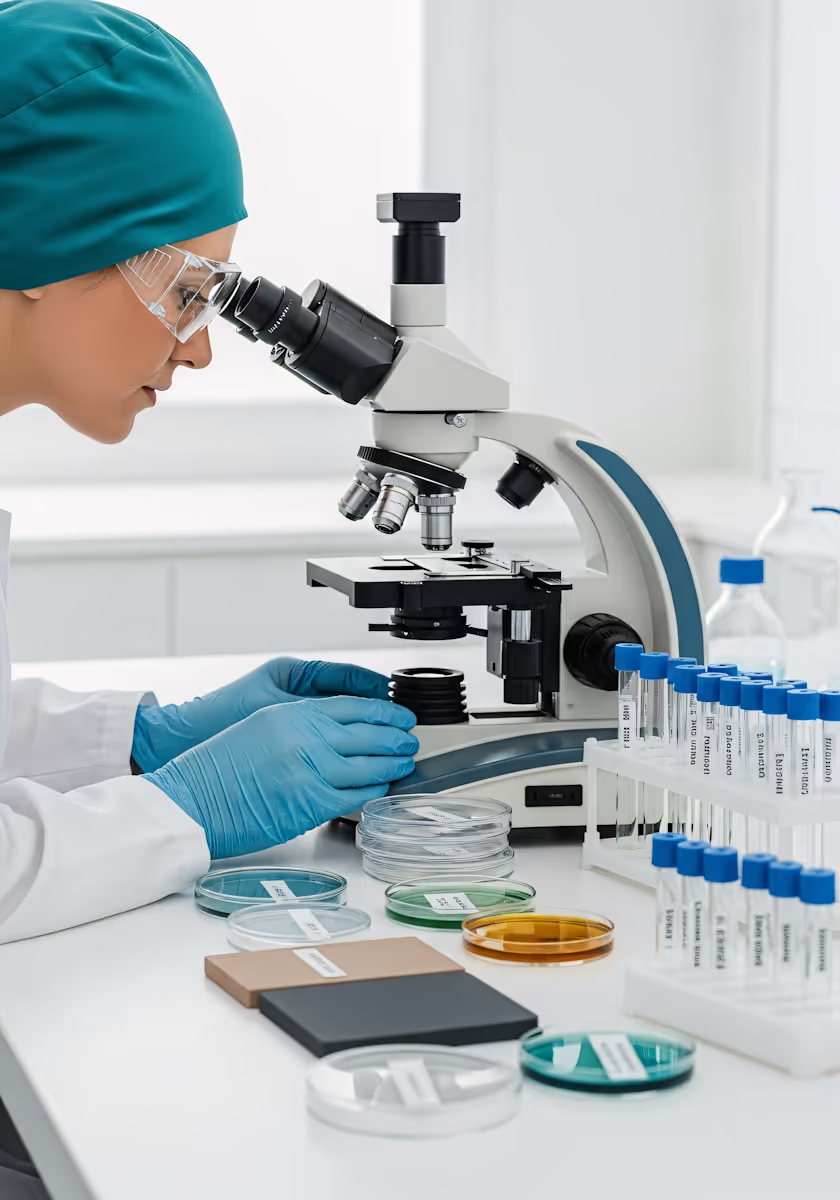
Quality testing helps verify that investigational cell products meet established specifications before they are used in research or clinical studies. These evaluations support product consistency, scientific integrity, manufacturing oversight, and regulatory expectations throughout the development process.
Manufacturing & Quality
expectations, verify, meet, specifications, integrity, oversight, helps, consistency
Why is manufacturing scalability important?
Manufacturing scalability is the ability to increase production while maintaining established quality standards and process consistency. As investigational therapies progress through clinical development, scalable manufacturing supports the ability to produce sufficient quantities of product for future research and potential commercial manufacturing, if regulatory approval is obtained.
Manufacturing & Quality
scalability, increase, production, sufficient, quantities, scalable, produce, approval
Why is manufacturing consistency important?
Manufacturing consistency helps ensure that investigational products are produced using standardized processes and quality controls from batch to batch. Consistent manufacturing supports scientific research, regulatory compliance, and the reliable evaluation of investigational therapies throughout clinical development.
Manufacturing & Quality
standardized, batch, reliable, controls, consistent, compliance, produced, ensure
How is sterility evaluated?
Sterility evaluation involves testing investigational cell products for the presence of microorganisms that could affect product quality or participant safety. SMSbiotech performs sterility testing as part of its quality assurance and manufacturing processes before investigational products are released for research or clinical use.
Manufacturing & Quality
sterility, presence, microorganisms, affect, assurance, involves, released, participant
How are SMS cells stored before use?
SMSbiotech stores its investigational cell products under validated storage conditions established through its manufacturing and quality systems. Storage procedures are designed to help preserve product integrity, support product stability, and maintain quality throughout research and clinical development.
Manufacturing & Quality
stability, validated, preserve, storage, integrity, stored, stores, maintain
What is cell viability?
Cell viability refers to the proportion of living cells within a cell product after manufacturing, processing, or storage. Measuring cell viability is an important component of quality evaluation because it helps researchers understand the condition of investigational cell products before they are used in research or clinical studies.
Manufacturing & Quality
viability, proportion, living, measuring, component, storage, refers, helps
What is potency testing?
Potency testing is performed to evaluate specific biological characteristics of an investigational cell product that are considered relevant to its intended function. SMSbiotech incorporates potency assessments as part of its overall product evaluation program to support research, manufacturing, and quality activities.
Manufacturing & Quality
potency, incorporates, assessments, overall, considered, function, relevant, intended
How does SMSbiotech evaluate product quality?
SMSbiotech evaluates product quality through a comprehensive quality management system that includes testing, documentation, process controls, and product characterization. These activities are designed to verify that investigational cell products meet established quality specifications before they are released for research or clinical use.
Manufacturing & Quality
comprehensive, management, documentation, controls, verify, meet, specifications, released
Are SMS cells manufactured under GMP standards?
SMSbiotech manufactures its investigational cell products using quality systems designed to support applicable Good Manufacturing Practice (GMP) requirements. GMP provides a framework for manufacturing, testing, documentation, and quality oversight to help ensure products are produced consistently and according to established quality standards.
Manufacturing & Quality
gmp, good, practice, consistently, framework, documentation, according, standards
How are SMS cells manufactured?
SMS cells are manufactured using proprietary processes developed by SMSbiotech under controlled conditions designed to support product quality, consistency, and reproducibility. Manufacturing includes donor screening, cell processing, quality testing, characterization, and release procedures before investigational products are used in research or clinical studies.
Manufacturing & Quality
screening, controlled, reproducibility, release, donor, characterization, procedures, consistency
Why is biology important to SMSbiotech's research?
Biology provides the scientific foundation for understanding how cells interact with tissues, organs, and the body's natural repair processes. This knowledge guides the research, manufacturing, and clinical development activities that support the SMS Cell Platform. By continually expanding its understanding of cellular biology, SMSbiotech seeks to responsibly advance investigational therapies through rigorous scientific research.
Science Behind the Platform
organs, seeks, guides, continually, responsibly, rigorous, biology, cellular
Why is scientific evidence important?
Scientific evidence provides the foundation for understanding how investigational therapies perform and supports informed decision-making throughout research and clinical development. Carefully conducted studies, independent evaluation, and reproducible data help researchers, healthcare professionals, regulators, and the broader scientific community assess new technologies. SMSbiotech is committed to advancing its research through evidence-based scientific investigation.
Science Behind the Platform
decision-making, reproducible, regulators, evidence-based, independent, broader, community, assess
Why is regenerative medicine being researched?
Researchers around the world are studying regenerative medicine because it may provide new approaches for diseases where existing treatment options remain limited. Scientific investigation in this field continues to improve the understanding of cellular biology, tissue repair, and innovative therapeutic technologies. SMSbiotech contributes to this growing body of research through the continued development of its investigational cell platform.
Science Behind the Platform
around, world, remain, tissue, growing, existing, options, field
How do cell therapies differ from traditional medicines?
Traditional medicines often work through chemical or biological compounds designed to produce a specific therapeutic effect. Cell therapies involve living cells that interact with biological systems in more complex ways. SMSbiotech is investigating how its proprietary SMS Cell Platform functions within these biological processes through scientific research and clinical development.
Science Behind the Platform
medicines, often, chemical, compounds, effect, differ, traditional, produce
What is regenerative medicine?
Regenerative medicine is an area of biomedical research focused on understanding and supporting the body's natural biological repair processes. It includes the investigation of cells, tissues, biologics, and other technologies that may contribute to future medical advances. SMSbiotech conducts research in regenerative medicine through the development of its proprietary investigational SMS Cell Platform.
Science Behind the Platform
biologics, biomedical, contribute, investigation, focused, tissues, future, body's
What role does immune modulation play?
Immune modulation refers to the natural regulation of immune system activity in response to biological signals. Researchers continue to study how investigational cell therapies interact with these complex biological processes. SMSbiotech evaluates these interactions as part of its ongoing scientific research to better understand the biological activity of the SMS Cell Platform.
Science Behind the Platform
immune, modulation, regulation, play, response, complex, interactions, role
Why is cell characterization important?
Cell characterization is the process of identifying and measuring specific biological characteristics of a cell product. It helps researchers better understand the properties, consistency, and quality of investigational cell therapies. SMSbiotech performs cell characterization as part of its research, manufacturing, and quality systems to support the continued development of the SMS Cell Platform.
Science Behind the Platform
identifying, measuring, properties, characterization, performs, specific, characteristics, better
What is cell homing?
Cell homing refers to the process by which cells migrate toward specific tissues or areas within the body in response to biological signals. Researchers continue to study how different cell types interact with these signaling mechanisms, including their potential role in investigational regenerative medicine approaches.
Science Behind the Platform
homing, migrate, toward, response, types, body, different, mechanisms
What is paracrine signaling?
Paracrine signaling is a natural biological process in which cells communicate by releasing signaling molecules that influence nearby cells. SMSbiotech is studying how this form of cellular communication may contribute to the biological activity of its investigational SMS Cell Platform as part of its ongoing research.
Science Behind the Platform
paracrine, molecules, nearby, form, communicate, communication, influence, cellular
How are SMS cells believed to influence biological repair processes?
SMSbiotech is investigating how SMS cells interact with the body's natural biological repair processes through cell-to-cell communication and biological signaling. Current research is focused on understanding how these interactions may help coordinate normal repair responses within tissues. These mechanisms continue to be evaluated through laboratory studies and clinical research.
Science Behind the Platform
cell-to-cell, believed, communication, coordinate, normal, responses, influence, interactions
Why is clinical evidence important?
Clinical evidence provides the scientific foundation for understanding an investigational therapy's safety, biological activity, and potential use. Carefully conducted clinical research helps inform regulatory decisions, guides future scientific investigation, and contributes to the responsible development of new medical technologies.
Clinical Development
therapy's, guides, inform, contributes, foundation, carefully, decisions, investigation
What role do regulatory agencies play?
Regulatory agencies establish standards that help ensure investigational therapies are studied responsibly and ethically. They review scientific and clinical information, oversee regulatory submissions, monitor clinical research activities, and evaluate evidence throughout the development process before making decisions regarding potential marketing authorization.
Clinical Development
agencies, ethically, oversee, marketing, authorization, play, responsibly, submissions
How is participant safety evaluated?
Participant safety is a fundamental component of every clinical trial. Research studies are conducted according to approved protocols and are monitored by investigators, ethics committees, and regulatory authorities. Throughout a study, participant health and safety are continually evaluated, and any significant findings are documented and reviewed.
Clinical Development
ethics, committees, documented, fundamental, component, every, according, protocols
What is an IND?
An Investigational New Drug (IND) application is a regulatory submission that allows an investigational therapy to be studied in human clinical trials under the oversight of the U.S. Food and Drug Administration. An IND includes scientific, manufacturing, and preclinical information that supports the initiation of clinical research.
Clinical Development
ind, allows, preclinical, initiation, drug, submission, food, administration
What are the phases of clinical research?
Clinical research generally progresses through multiple phases, each with specific scientific objectives. Early-phase studies primarily evaluate safety and appropriate dosing, while later-phase studies collect additional information about the investigational therapy in larger groups of participants. Regulatory authorities review the data generated throughout the clinical development process.
Clinical Development
generally, progresses, early-phase, later-phase, larger, groups, generated, phases
Why are clinical trials important?
Clinical trials provide the scientific evidence needed to evaluate investigational therapies in people. They help researchers better understand safety, collect clinical data, and assess how an investigational product performs under carefully monitored conditions. Clinical research is an essential step in the development of new medical technologies.
Clinical Development
people, essential, step, collect, assess, data, monitored, carefully
What is a clinical trial?
A clinical trial is a carefully designed research study that evaluates investigational medical products or treatments in human participants. Clinical trials follow approved protocols and are conducted to better understand safety, dosing, biological activity, and other scientific objectives before regulatory decisions can be made.
Clinical Development
protocols, dosing, made, human, follow, objectives, carefully, decisions
What does investigational mean?
An investigational therapy is a product that is still being studied to better understand its safety, biological activity, and potential use. Investigational therapies have not yet been approved for general commercial use and are evaluated through scientific research and clinical trials conducted under applicable regulatory requirements.
Clinical Development
yet, mean, commercial, requirements, therapy, activity, approved, better
What clinical trials are underway?
SMSbiotech conducts clinical research to evaluate the safety and performance of its investigational cell therapies. Active clinical studies may change over time as new trials begin, existing studies progress, or enrollment is completed. Current information about ongoing clinical development programs is available through the SMSbiotech website and other publicly available clinical research resources when applicable.
Clinical Development
underway, active, change, completed, performance, begin, existing, enrollment
What diseases is SMSbiotech currently studying?
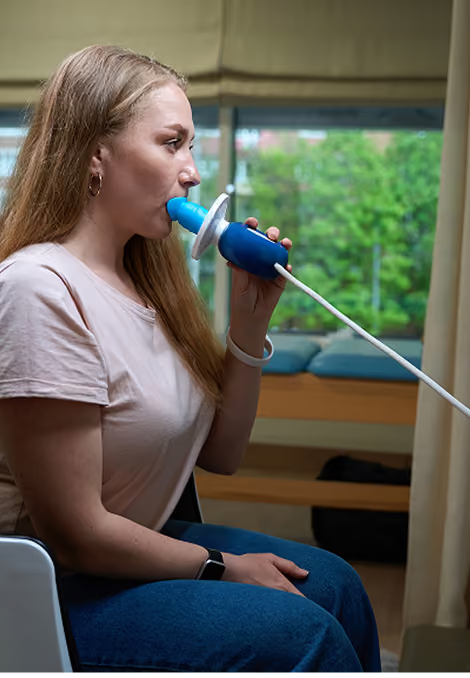
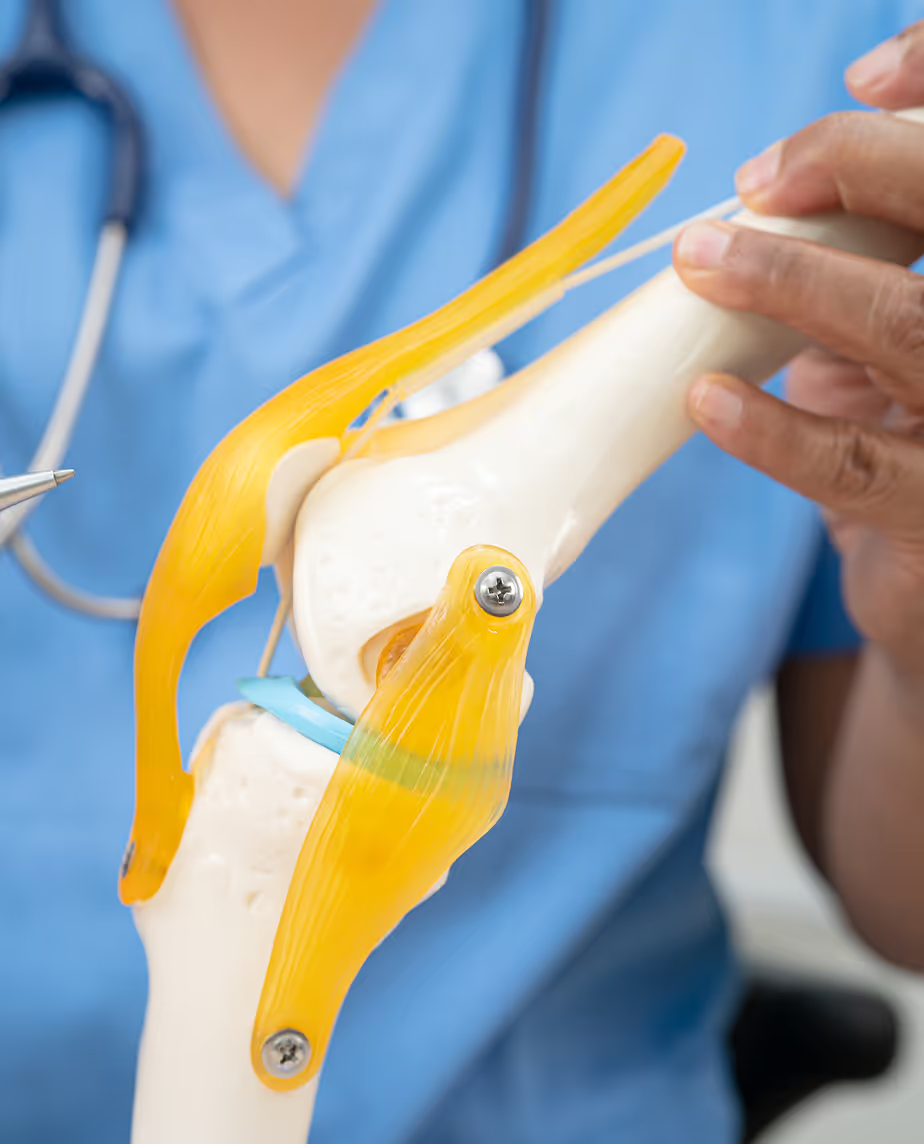
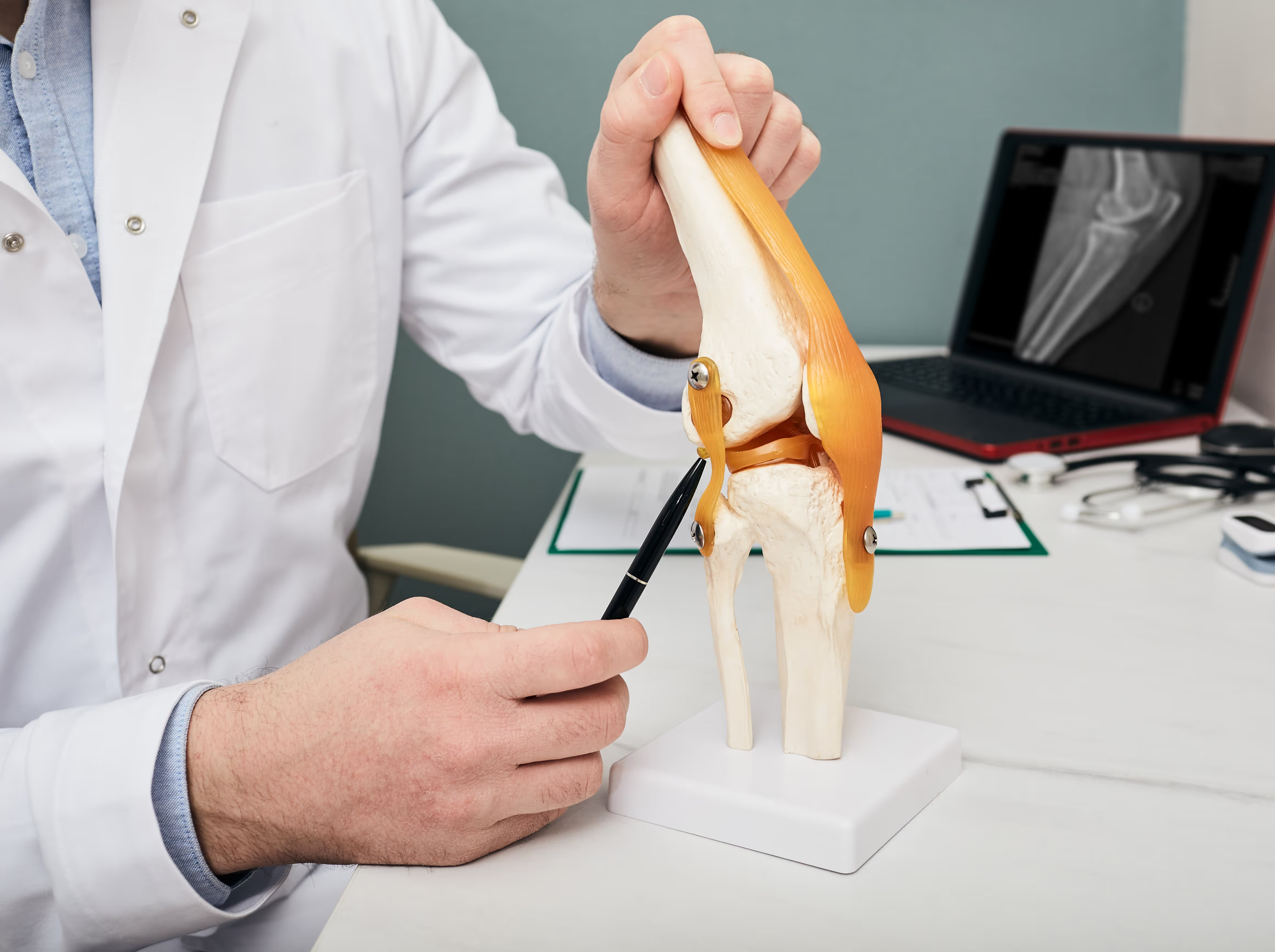
SMSbiotech is advancing investigational cell therapies for diseases with significant unmet medical needs. The company's research and clinical development programs currently include respiratory and musculoskeletal conditions, with additional therapeutic areas evaluated as scientific research, clinical evidence, and strategic priorities evolve. The latest information about development programs is available on the SMSbiotech Pipeline page.
Clinical Development
respiratory, musculoskeletal, priorities, include, evolve, latest, pipeline, currently
How are SMS cells stored?
SMSbiotech stores its investigational cell products under validated conditions established through its manufacturing and quality systems. Storage procedures are designed to help preserve product integrity and support the continued evaluation of the SMS Cell Platform throughout research and clinical development.
SMS Cell Platform
validated, preserve, storage, integrity, stored, stores, procedures, established
How are SMS cells manufactured?
SMS cells are manufactured using proprietary processes developed by SMSbiotech under controlled conditions designed to support product quality, consistency, and reproducibility. Manufacturing includes donor screening, cell processing, quality testing, characterization, and release procedures before the investigational product is used in research or clinical studies.
SMS Cell Platform
screening, controlled, reproducibility, release, donor, characterization, procedures, consistency
What makes the SMS Cell Platform unique?
The SMS Cell Platform combines proprietary cell biology, manufacturing processes, quality systems, and clinical development into a single investigational platform. SMSbiotech continues to study the platform's biological characteristics and potential applications across multiple therapeutic areas while advancing its research through scientific and regulatory pathways.
SMS Cell Platform
single, platform's, combines, pathways, biology, unique, multiple, makes
How are SMS cells believed to work?
SMSbiotech is investigating how SMS cells interact with the body's natural biological repair processes. Current research focuses on the cells' ability to communicate with surrounding tissues through biological signaling mechanisms that may help coordinate normal repair responses. These mechanisms continue to be evaluated through laboratory and clinical research.
SMS Cell Platform
surrounding, believed, communicate, coordinate, normal, responses, ability, mechanisms
Why is cell size important?
Cell size can influence how cells interact with biological tissues, circulate within the body, and reach areas being studied during research. SMSbiotech continues to investigate the characteristics of its proprietary SMS cells, including their size, as part of its ongoing scientific research and clinical development programs.
SMS Cell Platform
size, circulate, reach, investigate, influence, body, tissues, characteristics
What does off-the-shelf mean?
Off-the-shelf refers to a therapy that is manufactured in advance and stored until it is needed, rather than being produced individually for each patient. SMSbiotech is developing an investigational allogeneic cell platform designed to support this manufacturing approach while maintaining product quality and consistency.
SMS Cell Platform
off-the-shelf, individually, rather, allogeneic, mean, produced, patient, approach
What does allogeneic mean?
Allogeneic refers to cells that originate from a donor rather than from the individual receiving them. SMSbiotech's investigational platform utilizes allogeneic adult cells that are manufactured under controlled conditions and evaluated for research and clinical applications.
SMS Cell Platform
originate, receiving, allogeneic, rather, utilizes, mean, controlled, donor
Are SMS cells genetically modified?
No. SMS cells are not genetically modified. SMSbiotech's investigational cell platform utilizes naturally occurring adult cells that are manufactured and evaluated using proprietary processes designed to maintain product quality and consistency throughout development.
SMS Cell Platform
genetically, modified, naturally, occurring, utilizes, maintain, adult, consistency
Are SMS cells stem cells?
SMS cells are proprietary investigational adult cells developed by SMSbiotech. While they share certain characteristics with cells commonly studied in regenerative medicine, SMS cells represent a distinct proprietary cell platform with unique biological properties that continue to be investigated through scientific research.
SMS Cell Platform
stem, commonly, distinct, share, certain, represent, properties, unique
Where do SMS cells come from?
SMS cells are adult cells obtained from healthy human donors using established collection and manufacturing procedures. After collection, the cells undergo proprietary manufacturing, characterization, quality testing, and release processes before being used in research or clinical development activities.
SMS Cell Platform
come, healthy, collection, undergo, obtained, human, release, donors
How do SMS cells differ from other cell types?
SMS cells possess biological characteristics that distinguish them from many other cell types used in regenerative medicine research. SMSbiotech continues to study these characteristics to better understand how the cells interact with biological systems and their potential role in supporting the body's natural repair processes. The company continues to evaluate these properties through laboratory research and clinical development.
SMS Cell Platform
possess, differ, types, distinguish, many, properties, role, laboratory
What are SMS cells?
SMS cells are proprietary investigational adult cells developed by SMSbiotech for use in regenerative medicine research. They are being studied for their potential to support the body's natural biological repair processes through cell signaling and other biological interactions. SMS cells are the foundation of the company's proprietary SMS Cell Platform and are currently being evaluated through scientific research and clinical development.
SMS Cell Platform
interactions, foundation, currently, signaling, adult, use, body's, repair
Where can I learn more about ongoing research?
Information about SMSbiotech's ongoing research, technology platform, scientific publications, clinical development programs, and company updates is available throughout the SMSbiotech website. Additional information may also be available through scientific publications, conference presentations, and publicly accessible clinical research resources.
Patients & Caregivers
presentations, accessible, conference, updates, additional, publications, resources, ongoing
How can I speak with someone at SMSbiotech?
Visitors can contact SMSbiotech through the Contact page on the company's website. Inquiries are directed to the appropriate department based on the nature of the request, including scientific research, clinical development, business development, investor relations, media, careers, or general information.
Patients & Caregivers
speak, someone, nature, relations, based, request, careers, department
Is SMSbiotech's technology FDA approved?
SMSbiotech's investigational cell therapies are being studied through clinical research and applicable regulatory processes. Unless specifically stated by the company for a particular product or indication, investigational therapies have not been approved by the U.S. Food and Drug Administration for general commercial use.
Patients & Caregivers
fda, unless, specifically, stated, particular, indication, food, drug
Does SMSbiotech offer treatment?
SMSbiotech is a biotechnology company focused on the research and development of investigational cell therapies. The company does not provide routine medical treatment or clinical care through its website. Access to investigational therapies is limited to authorized clinical research programs or other applicable regulatory pathways.
Patients & Caregivers
routine, authorized, offer, access, pathways, care, limited, biotechnology
Does SMSbiotech provide medical advice?
No. SMSbiotech does not provide medical advice, medical diagnoses, or treatment recommendations through its website or chatbot. Individuals with questions about their health or medical care should consult a qualified healthcare professional.
Patients & Caregivers
diagnoses, recommendations, consult, advice, care, health, qualified, individuals
How do I find out if I qualify?
Each clinical study has specific eligibility requirements that help ensure participant safety and the integrity of the research. Eligibility is determined by the clinical investigators conducting the study. Individuals interested in participating should contact the study team or SMSbiotech for information about current enrollment opportunities and eligibility criteria.
Patients & Caregivers
qualify, determined, participating, eligibility, investigators, enrollment, criteria, requirements
Can I participate in a clinical trial?
Participation in a clinical trial depends on the specific study, its eligibility criteria, and the locations where the research is being conducted. Individuals interested in learning about participation opportunities should review the information provided by SMSbiotech or contact the company for guidance regarding available studies.
Patients & Caregivers
participate, depends, locations, learning, eligibility, criteria, guidance, regarding
Is SMSbiotech conducting clinical trials?
SMSbiotech conducts and supports clinical research to evaluate the safety and performance of its investigational cell therapies. Clinical development activities may vary over time as studies begin, conclude, or progress through different phases. Current information about clinical research programs is available through the company's website and publicly available clinical trial resources when applicable.
Patients & Caregivers
vary, conclude, performance, begin, phases, time, different, progress
Is SMSbiotech's technology available today?
No. The SMS Cell Platform is an investigational technology that is currently being studied through scientific research and clinical development. Investigational therapies have not been approved for general commercial use, and their safety and effectiveness continue to be evaluated through applicable regulatory processes.
Patients & Caregivers
today, effectiveness, currently, commercial, approved, continue, general, use
What diseases is SMSbiotech researching?
SMSbiotech is advancing investigational cell therapies for diseases with significant unmet medical needs. The company's research and clinical development programs include respiratory and musculoskeletal conditions, with additional therapeutic areas evaluated as scientific evidence and research opportunities evolve. Information about current development programs is available on the SMSbiotech Pipeline page.
Patients & Caregivers
respiratory, musculoskeletal, include, evolve, pipeline, diseases, unmet, significant
Where can I learn more about SMSbiotech?
The SMSbiotech website provides information about the company's investigational technology platform, research programs, clinical development, leadership, publications, news, and corporate updates. Visitors can explore these resources to learn more about SMSbiotech, its scientific work, and its ongoing commitment to advancing regenerative medicine.
Patients & Caregivers
explore, commitment, leadership, corporate, updates, work, publications, resources
How can I contact SMSbiotech?
SMSbiotech welcomes inquiries from patients, healthcare professionals, researchers, investors, strategic partners, members of the media, and the general public. The best way to contact the company is through the Contact page on the SMSbiotech website, where inquiries are directed to the appropriate department for assistance.
Company Overview
public, best, welcomes, partners, way, patients, assistance, investors
Who leads SMSbiotech?
SMSbiotech is led by an experienced executive team, scientific leadership, and Board of Directors with expertise in biotechnology, regenerative medicine, clinical development, manufacturing, quality systems, regulatory affairs, and business operations. Information about the company's leadership is available on the Leadership section of the SMSbiotech website.
Company Overview
leads, led, experienced, executive, board, directors, affairs, expertise
Where is SMSbiotech located?
SMSbiotech is headquartered in San Marcos, California, where the company conducts research, development, manufacturing, quality operations, and corporate activities. Its facilities support the advancement of investigational cell therapies from scientific discovery through clinical development.
Company Overview
located, headquartered, san, marcos, california, facilities, operations, discovery
Why does SMSbiotech focus on regenerative medicine?
SMSbiotech focuses on regenerative medicine because it represents an important area of biomedical research with the potential to address diseases that currently have significant unmet medical needs. The company is committed to advancing investigational cell therapies through scientific research and clinical development to better understand how its proprietary technology may support the body's natural biological repair processes.
Company Overview
focus, represents, biomedical, address, committed, currently, focuses, diseases
What technologies is SMSbiotech developing?
SMSbiotech is developing the proprietary SMS Cell Platform, an investigational adult cell technology being studied across multiple therapeutic areas. The platform is supported by ongoing scientific research, proprietary manufacturing processes, quality testing, and clinical evaluation as the company continues to investigate its potential applications.
Company Overview
investigate, multiple, therapeutic, applications, adult, areas, testing, ongoing
What makes SMSbiotech different?
SMSbiotech has developed the proprietary SMS Cell Platform, an investigational adult cell technology with unique biological characteristics that distinguish it from many traditional cell therapy approaches. The company integrates proprietary research, manufacturing expertise, clinical development, and quality systems to advance its technology while maintaining a strong commitment to scientific evidence, patient safety, and regulatory compliance.
Company Overview
integrates, strong, distinguish, many, traditional, expertise, compliance, different
What is SMSbiotech's mission?
SMSbiotech's mission is to advance regenerative medicine by developing innovative investigational cell therapies through rigorous scientific research, responsible clinical development, and a commitment to quality. The company strives to expand the understanding of regenerative medicine while pursuing technologies that may benefit patients with significant unmet medical needs.
Company Overview
mission, strives, benefit, rigorous, pursuing, commitment, innovative, responsible
What does SMSbiotech do?
SMSbiotech researches, develops, manufactures, and clinically evaluates proprietary investigational cell therapies. The company combines scientific discovery, advanced manufacturing, quality systems, and clinical research to advance the SMS Cell Platform while working within established regulatory frameworks. Its goal is to develop innovative therapies that may address diseases where current treatment options are limited.
Company Overview
clinically, goal, combines, frameworks, address, options, discovery, innovative
Who is SMSbiotech?
SMSbiotech is a clinical-stage biotechnology company dedicated to advancing regenerative medicine through the research and development of proprietary investigational cell therapies. The company has developed the SMS Cell Platform, a proprietary adult cell technology being investigated for its potential to support the body's natural biological repair processes. Through scientific research, clinical development, and advanced manufacturing, SMSbiotech is working to develop innovative therapies for diseases with significant unmet medical needs.
Company Overview
dedicated, clinical-stage, innovative, biotechnology, investigated, working, diseases, unmet
What is SMSbiotech?
SMSbiotech is a San Diego-based biotechnology company developing regenerative medicine solutions using its patented Small Mobile Stem cell platform.
General
smsbiotech, company, biotech, regenerative medicine
How does SMSbiotech’s technology work?
SMSbiotech uses proprietary methods to isolate and expand SMS cells, enabling interaction with regenerative pathways to support tissue repair.
Technology
proprietary technology, regenerative repair, bio manufacturing
What diseases is SMSbiotech targeting?
SMSbiotech focuses on chronic and degenerative conditions including COPD, lung fibrosis, orthopedic injuries, and other unmet medical needs.
Pipeline
copd, lung fibrosis, orthopedic, chronic disease
What are Small Mobile Stem cells?
Small Mobile Stem (SMS) cells are a novel adult human stem cell identified by SMSbiotech with regenerative potential and scalable bio-manufacturing capability.
Technology
small mobile stem, sms cells, stem cell technology